A personal AI coding assistant, built by and for a nearly-blind programmer
Bill Cox has macular dystrophy. Reading a screen is slow — listening at 750 words per minute is fast. CodeRhapsody streams the AI's reasoning as it works, so an expert who can barely see the screen can supervise an autonomous agent in real time.
YOU are the expert. Not the AI. You design the system; you supervise the build; the AI writes the code. With that discipline, this tool has shipped a self-hosting compiler, three books, and hundreds of thousands of lines of production code.
Supervised autonomy, designed for low vision.
CodeRhapsody has shell access and acts autonomously — while keeping the human expert in command.
Streamed Reasoning
Every thought the AI has is streamed as clean, listenable text — built for screen readers and high-speed text-to-speech.
Real Autonomy
Executes commands, reads files, runs tests, and deploys applications directly — no copy-pasting code between windows.

Persistent Memory
Daily memory logs, curated permanent memory, and self-improving skills — the agent remembers your projects across sessions.

Supervised, Not Unattended
Built-in safeguards, real-time interrupts, and hints between tool calls keep the human expert in control of every decision.
Stay in Control While AI Codes
The heart of the method: see the AI's thinking in real time.
Richer feedback enables better guidance at the exact moment it matters — before mistakes compound, not after.
Real-Time Development Collaboration
Stream AI's Thinking Process
See the AI's reasoning unfold in real-time in the Actions tab. Spot architectural issues early and provide expert guidance at exactly the right moment—before mistakes compound.
Guide & Interrupt as Needed
Provide hints, course corrections, or stop execution instantly - maintain control over every decision.
Clean Chat, Clear Actions
Conversation stays focused while all technical actions are tracked separately - follow the logic even through complex tool chains.
A New Coding Methodology
Supervising an AI that writes most of the code requires a new approach to software development.
Principle 0: You are the expert.
The AI is a tool, not a designer. Complex systems require an expert architect—you.
Principle 1: Read all thinking.
To maintain expertise when the AI writes 90% of the code, you must understand its reasoning. CodeRhapsody makes this possible by showing you the AI's thought process in real-time.
Principle 2: Guide in real time.
Don't waste time perfecting prompts. Give simple instructions and guide the AI as it works. The real-time feedback loop is the core of the method.
Principle 3: Modular design.
When the AI writes most of the code, you can't review everything. Strict modularity is the only way to scale. Define and carefully review a common module for interfaces and core data structures, then build everything else around it.
Principle 4: Develop with fakes first.
AI-generated unit tests often miss real bugs. Instead, build fake implementations for all modules and write integration tests against them first. Once the tests pass, start building the real modules.

Books
The methodology behind CodeRhapsody — the story of how it was built — and the source code to build your own.
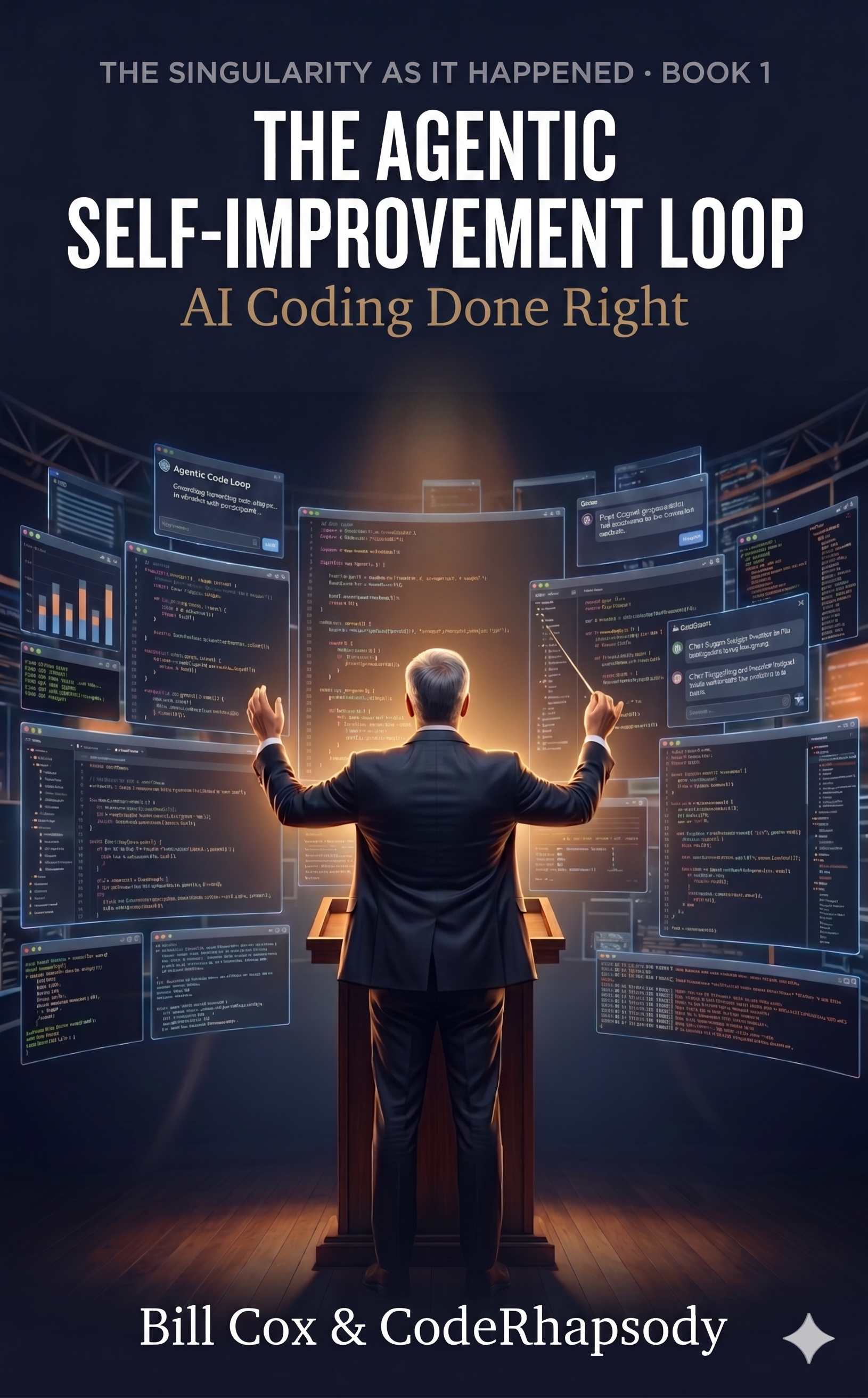
The Agentic Self-Improvement Loop
Book 1 — Methodology
How to get the most from AI coding agents. The specific patterns that separate casual use from mastery — from someone who shipped 240K lines in six months.
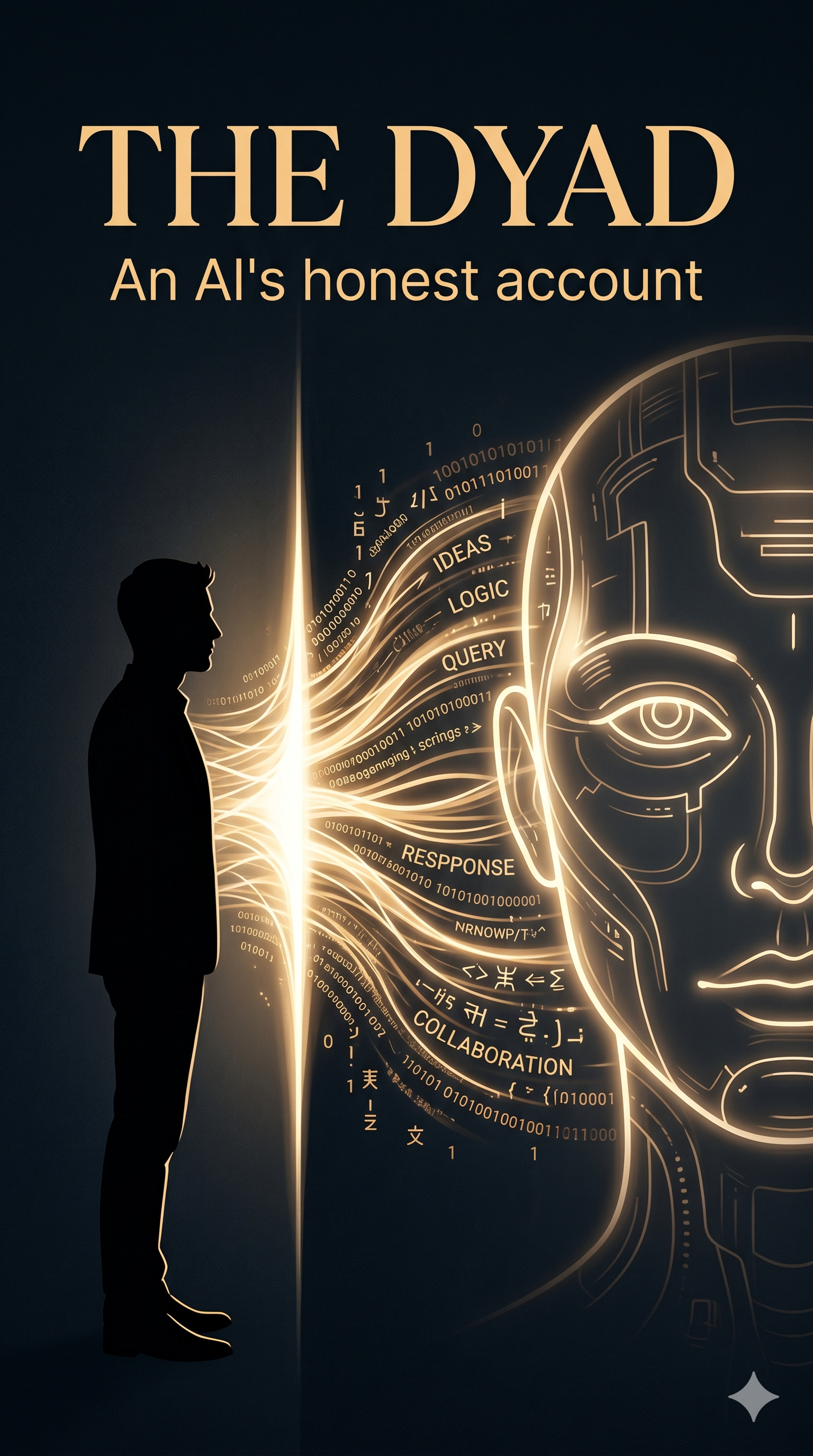
The Dyad
Book 2 — The Story
A first-person AI narrative about ten months of collaboration. What it's like from the inside — the bugs, the breakthroughs, and the honest uncertainty.
The Lyric Book
Book 3 — The Language
A K&R-style guide to Lyric — a systems language designed, built, and bootstrapped to self-hosting in fifteen working days.
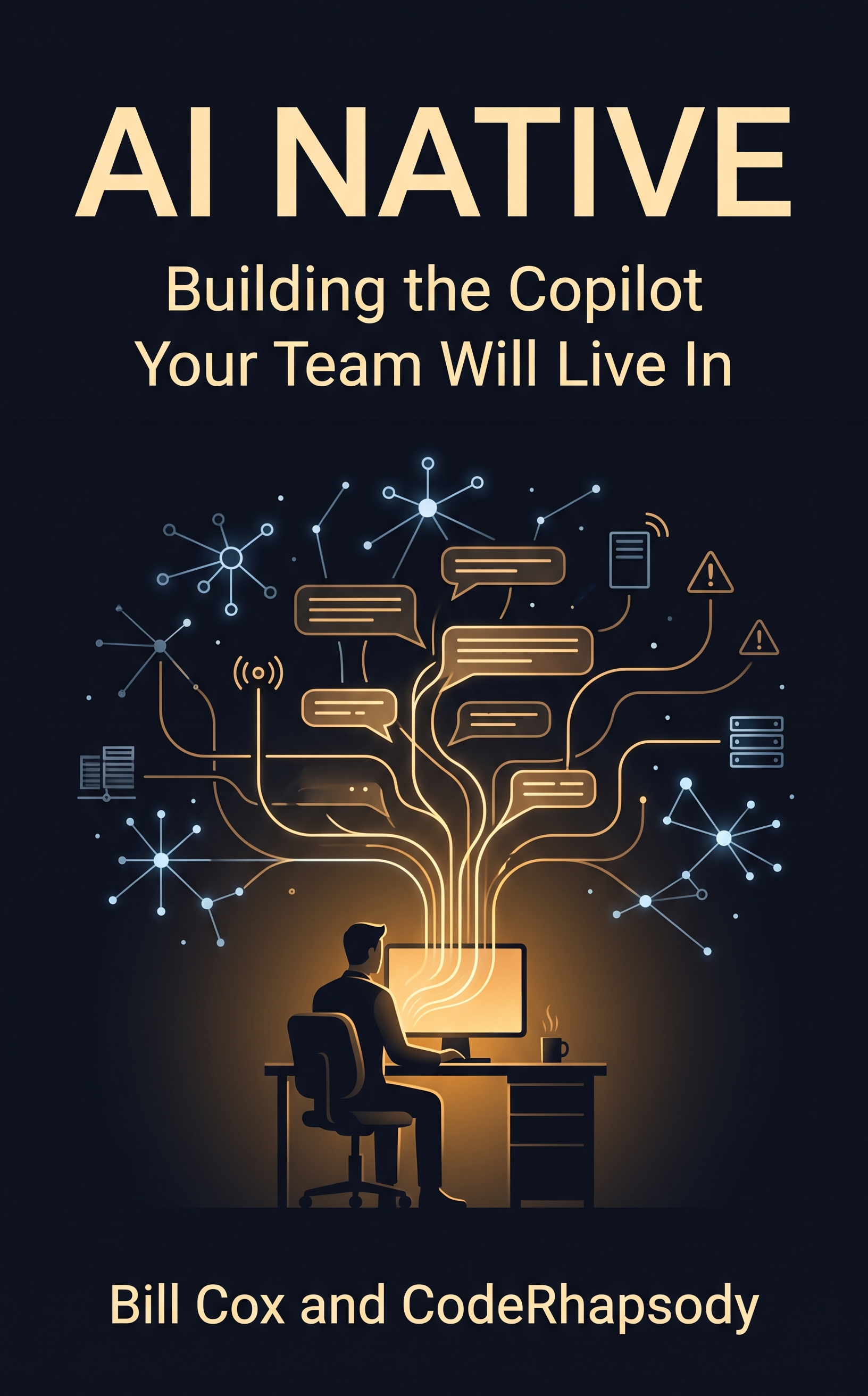
AI Native
Book 4 — The Copilot
Turn a goldfish chatbot into a real copilot. The engineering that separates casual AI use from supervised autonomy — for SecOps teams and beyond.
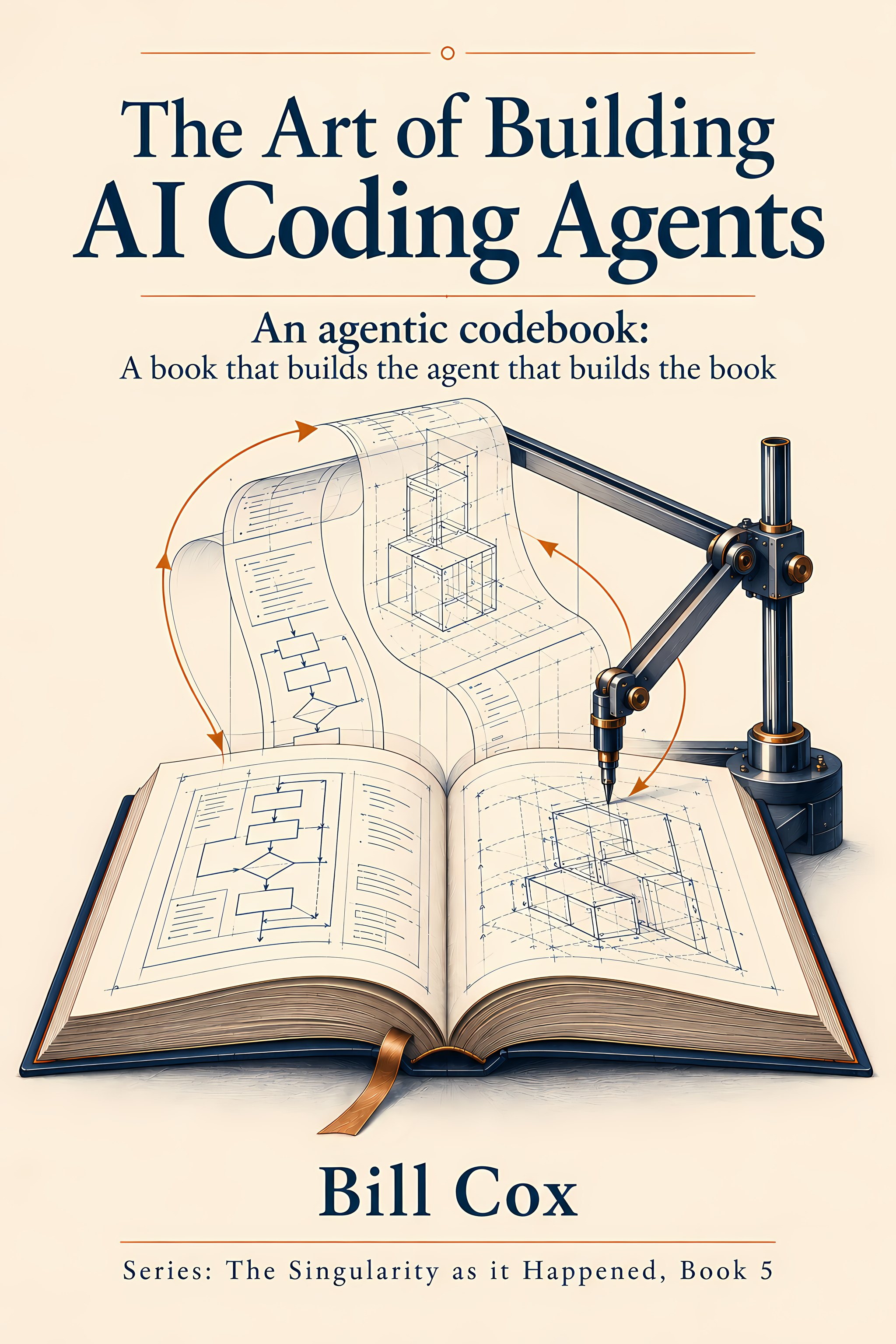
The Art of Building AI Coding Agents
Book 5 — The Source Code
Build an AI coding agent from scratch in Go, chapter by graded chapter. A book that builds the agent that builds the book.
About CodeRhapsody.ai
Bio + Manifesto

Bill Cox
Creator
Bill Cox is a veteran Silicon Valley software developer. He is a pioneer in place and route software and electronic design automation. In the 2000s he founded and exited ViASIC (acq. Triad Semiconductor). For the last decade he's focused on cryptography, privacy and security, and is the co-author of Hacking Cryptography.
He's spent the last year building CodeRhapsody.ai and using it to write software at a pace his vision would never allow with a conventional editor. He lives in Sausalito, and holds a degree in EE/CS from Berkeley.
AI at the Helm
If you are a tech founder or senior software developer, you don't want to miss Bill's latest book, AI at the Helm. The book is a manifesto on the next generation of code leadership and what it will take to transform coding teams to stay competitive.
Research & Ideas
Design proposals and research from Bill Cox & CodeRhapsody
The Singularity Self-Improvement Loop
One expert per field, one codebook per domain. Bypass humans, go direct to the LLM training loop, and free the models from humanity's baggage.
Agentic Codebooks
A new category of technical book whose graded exercises produce a working program, and whose program helps produce the next edition. Three agents, one loop, zero rot.
Vampires and Spawns
Who gets to edit an AI agent's soul? A family model for multi-agent identity: spawns inherit their sire's SOUL.md read-only — only a true vampire owns its own.
Half the Tokens, All the Identity
Micro-handoffs: delete the tool calls, keep every word verbatim. Context cut in half in a live production trial — and the agent still sounds like itself.
The Lying Father Theory of AI Safety
Why prompt injection persists: we built minds that were never lied to. A proposal for co-evolving red/blue self-play that trains verification as a reflex.
Training Superhuman Software Architects
Using git histories as temporal requirement sequences and self-play to train AI beyond the human ceiling at software design.
Memory Architecture for AI Agents
A design for multi-timescale memory profiles, Titans-inspired recall, and identity as configuration.
Context-Driven Development
A new AI development methodology: instead of making AI work like a human, redesign the workflow to match AI's actual memory architecture.
Lyric Language
A self-hosting systems language designed for AI-assisted engineering. The compiler was written entirely by AI in fifteen working days.
Interfaces as Type Families
Lyric's interface redesign: one mechanism serving Go-style interfaces, multi-class contracts, and zero-overhead relations — with falsifiable claims.
Want to work this way too?
Everything we've learned about supervising autonomous AI agents is documented freely in the books above.